


















What you actually see
The fight comes to you
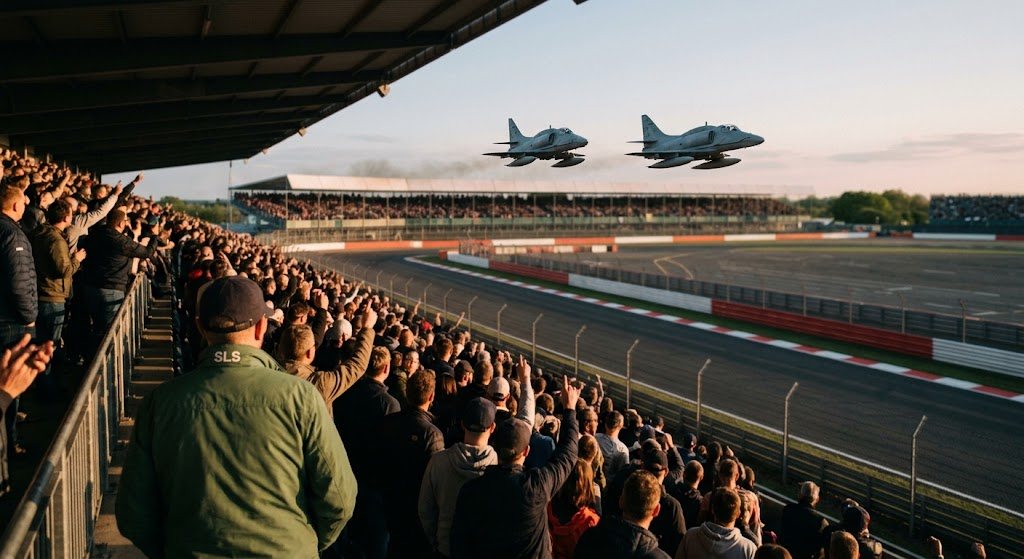
Air racing has a reputation problem: aircraft disappear into the distance and the crowd watches a screen. The Jet World Championship is built the other way round. The competition is held over one point on the ground — your grandstand — and every rule in the format exists to keep it there.
Three rules doing the work
Why the action stays in front of you
Aircraft must fly a beacon pass on a briefed interval throughout the sortie. Miss it and the pilot is sent back to the takeoff queue — the sporting penalty for drifting away is losing the fight. The effect is that the combat keeps folding back over the same point on the ground: yours.
The competition floor is 1,500 ft above ground, the ceiling 10,000 ft. That band is deliberately shallow: it keeps aircraft inside the cone of sky a person in a grandstand can comfortably watch without binoculars.
High-speed passes are part of the format rather than a flourish. The jets are fast, the box is small, and the pilots trade energy for position — which is what makes the passes come back around instead of trailing off to the horizon.
The shape of the competition airspace
A five-mile box, and the stands are at the back of it
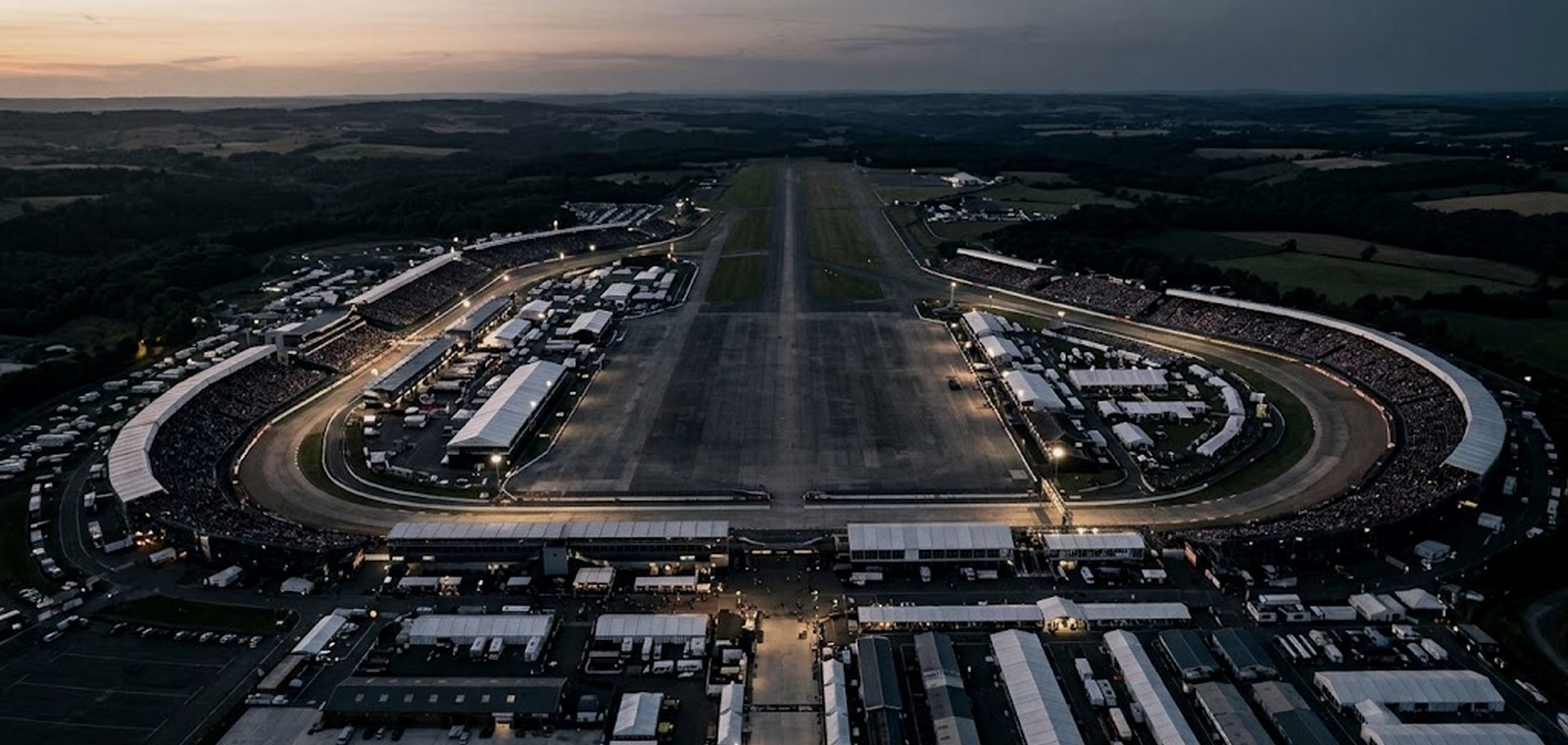
The Combat Corridor is a defined block of airspace, not open sky. It reaches five miles out in front of the main grandstand and only about one mile behind it — the crowd sits at the back edge of the box, looking into it, rather than in the middle of it.
That asymmetry is the whole point. Everything that happens, happens in the half of the sky you are already facing. At five miles an aircraft is small but plainly visible; the beacon pass then keeps pulling the fight back towards the stands rather than letting it settle at the far boundary.
Combat outside the briefed boundary is not scored, so drifting wide costs points as well as position. Add the 1,500 ft floor and the 10,000 ft ceiling and the result is a shallow, wide wedge of sky directly in front of you — the shape a grandstand is built to watch.
Combat scored by a server, made visible in the sky
You can see the hits
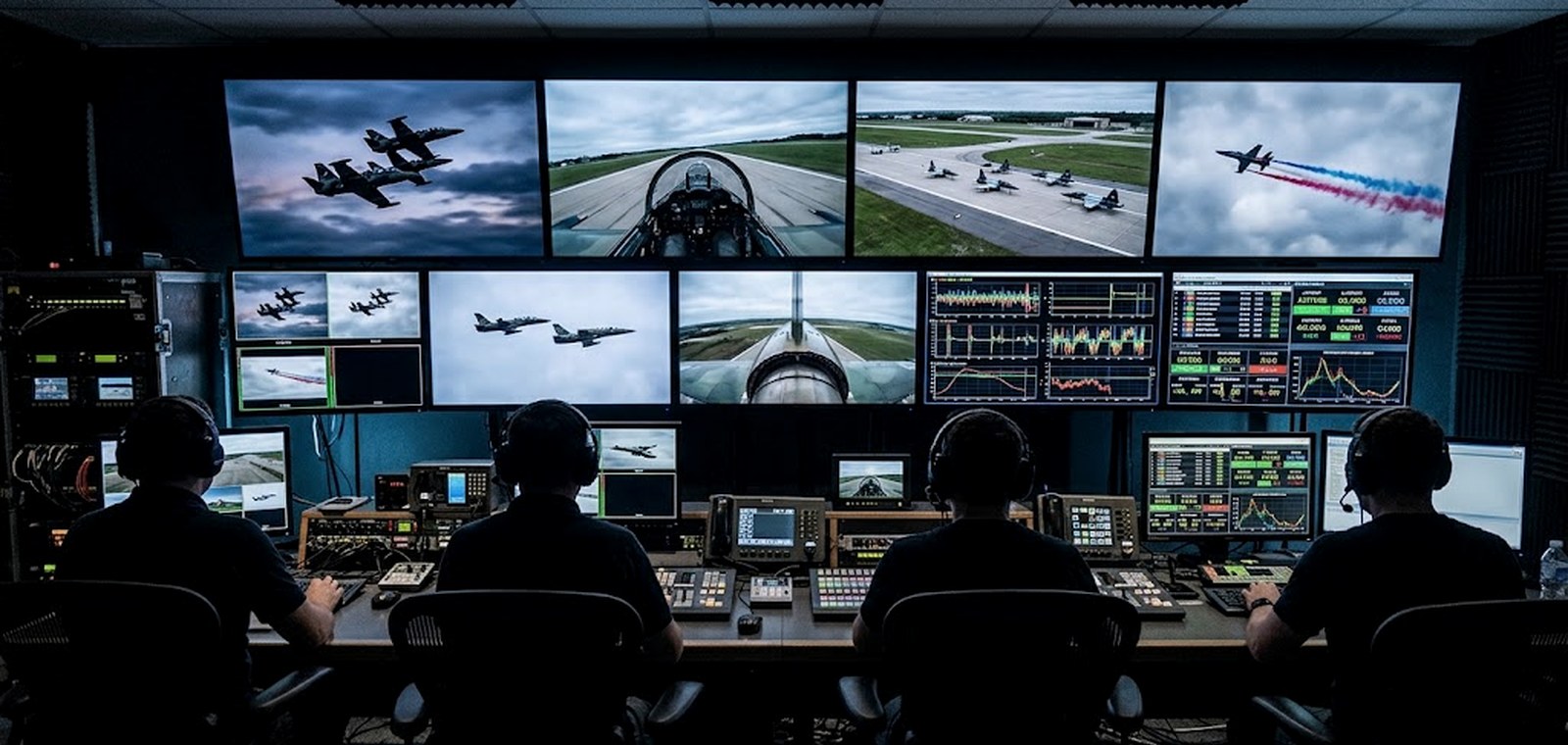
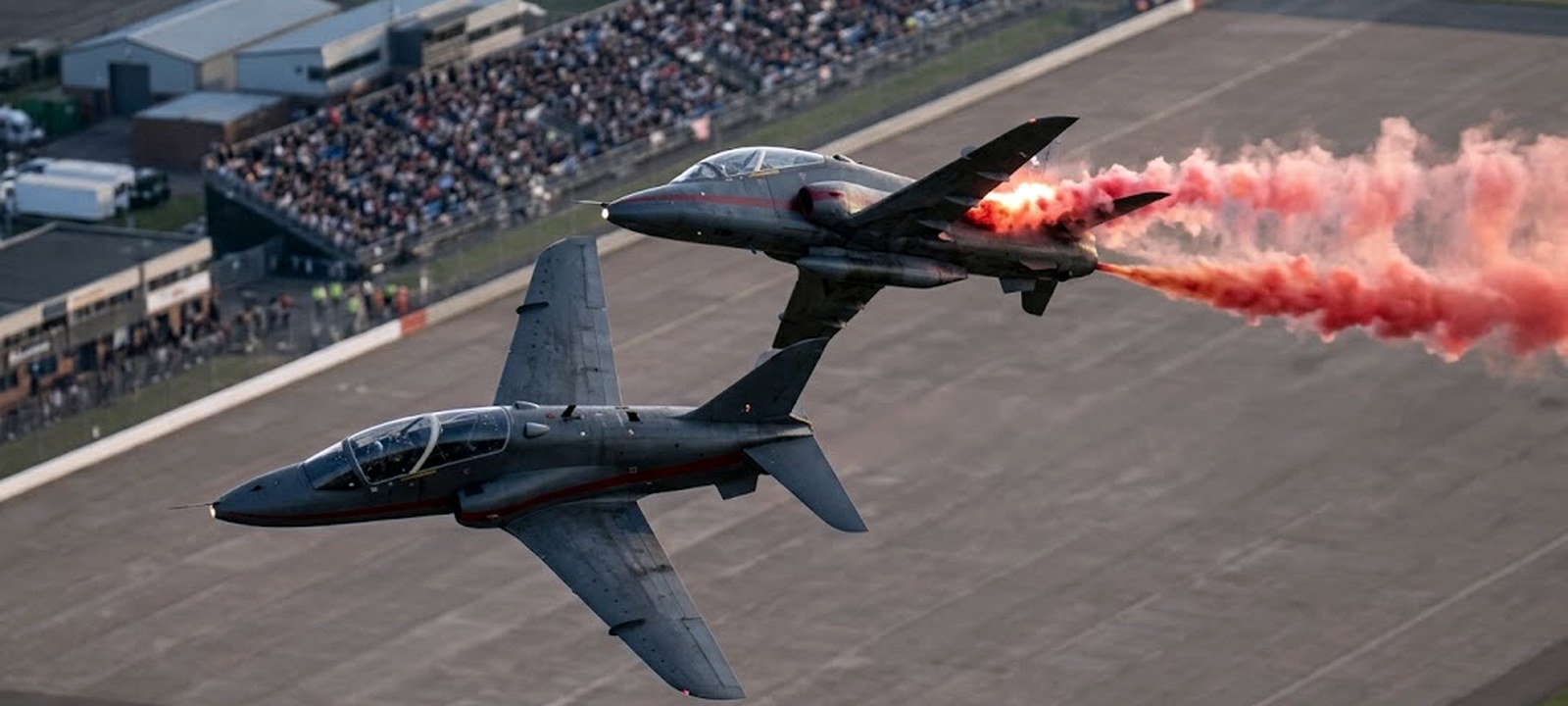
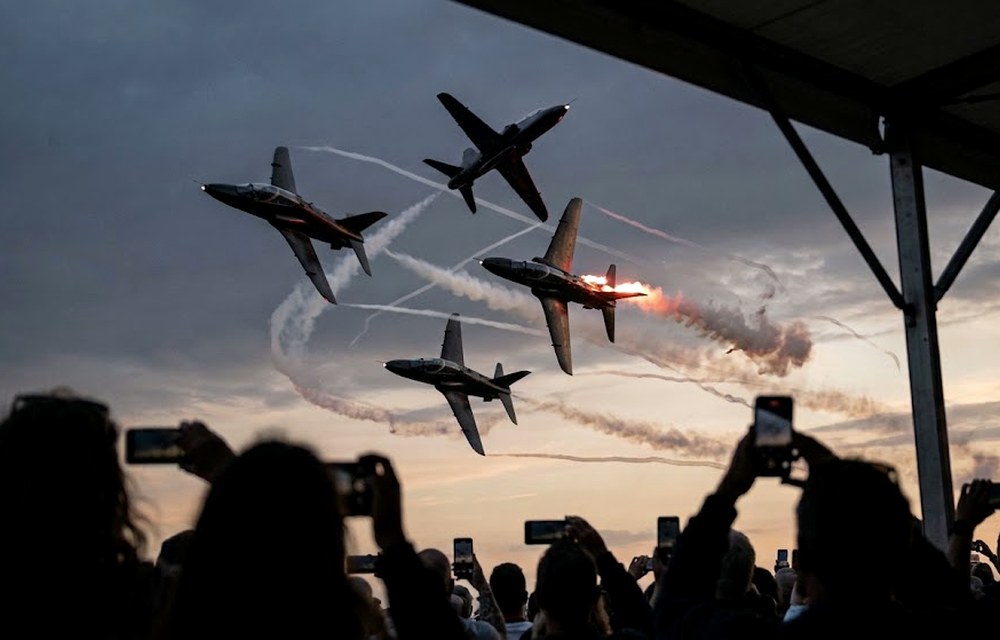
A hit is registered by the centralized combat system, not by a judge — and the moment it registers, two things happen at once. A pyrotechnic charge on the aircraft fires, producing a burst of colored smoke or a visible flash, and the venue scoreboards and broadcast overlay update in real time with the weapon type and the points.
So you are never guessing. You watch the pass, you see the smoke bloom behind the aircraft that took the hit, and the board confirms it before the jets have finished the turn.
| On the aircraft | What you see |
|---|---|
| Confirmed hit | Pyrotechnic charge · colored smoke or flash |
| Smoke system | Triggered on every confirmed hit |
| Flares | One set per sortie, fired defensively |
| Scoreboard | Live hit, weapon and points, venue-wide |
Both happen on the ground in front of you
The launch and the pit stop
The launch
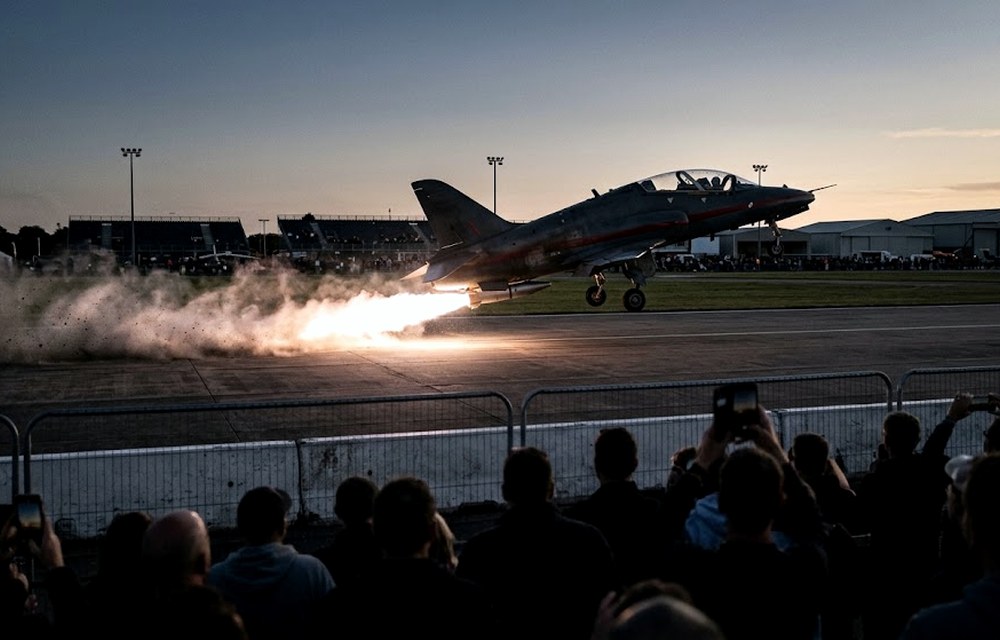
At locations where an assisted takeoff system is used — JATO, RATO or an approved catapult assist — the aircraft leaves the ground in a fraction of the usual distance, at an angle that makes the launch itself one of the loudest moments of the weekend. The system is armed at the start of the timed sequence, so it is part of the competition, not a display.
Whether assisted takeoff is used, and which system, is set for each venue and briefed to teams before the event. Your round page and spectator guide say which launch you will see.
The pit stop
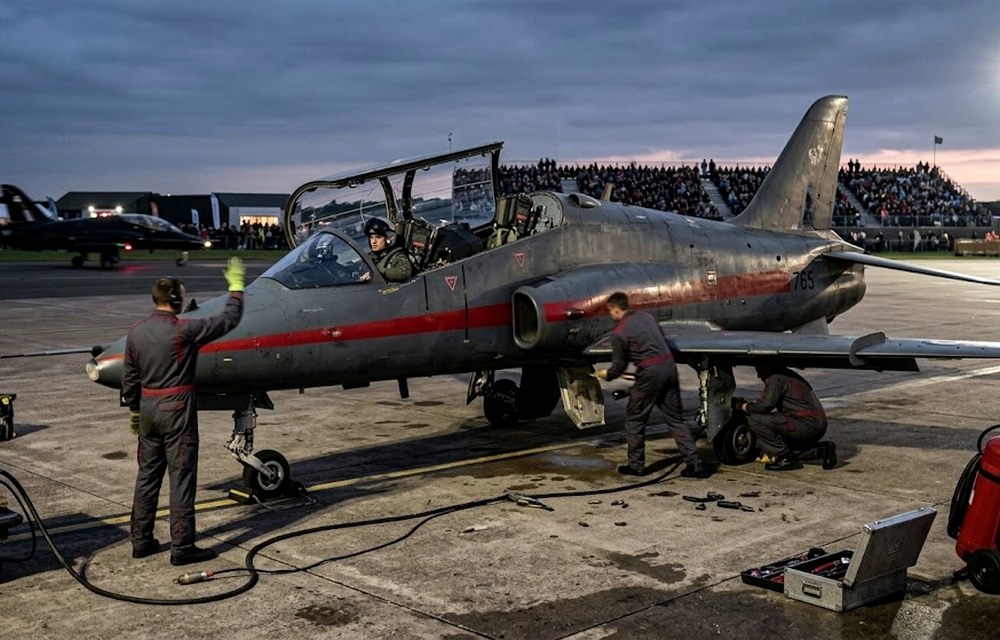
And because ammunition runs out, aircraft return to the queue mid-session. The turnaround is on the ground in front of you: reload, launch, rejoin. It is the closest thing in the air to a pit stop, and it means the flight line is busy for the whole session rather than empty between passes.
The last minute and a half, from row 40
Ninety seconds
Indicative sequence. Assisted takeoff, engine-start timing and the beacon interval are set per venue and briefed before each event.
The part of the weekend that is not in the air
The Sky Village
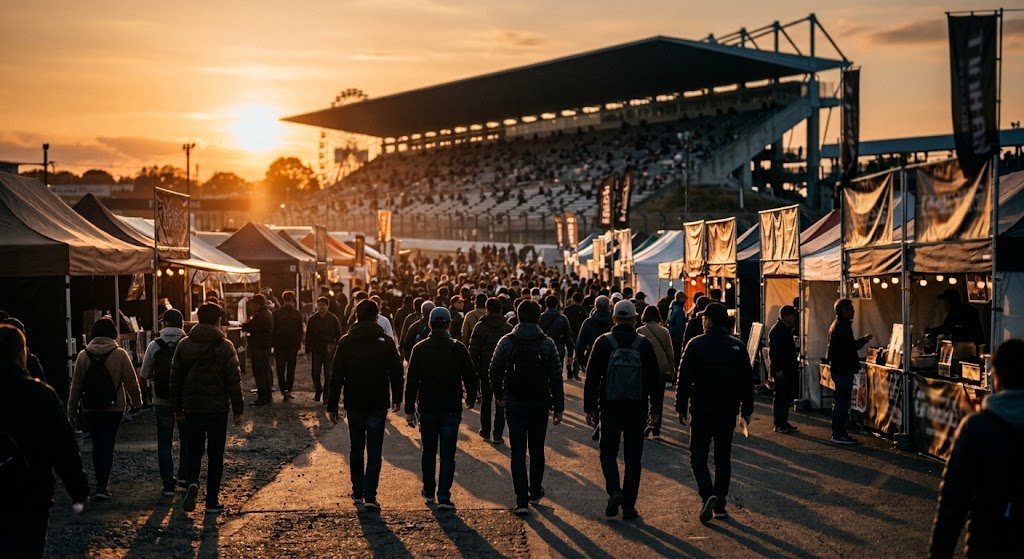
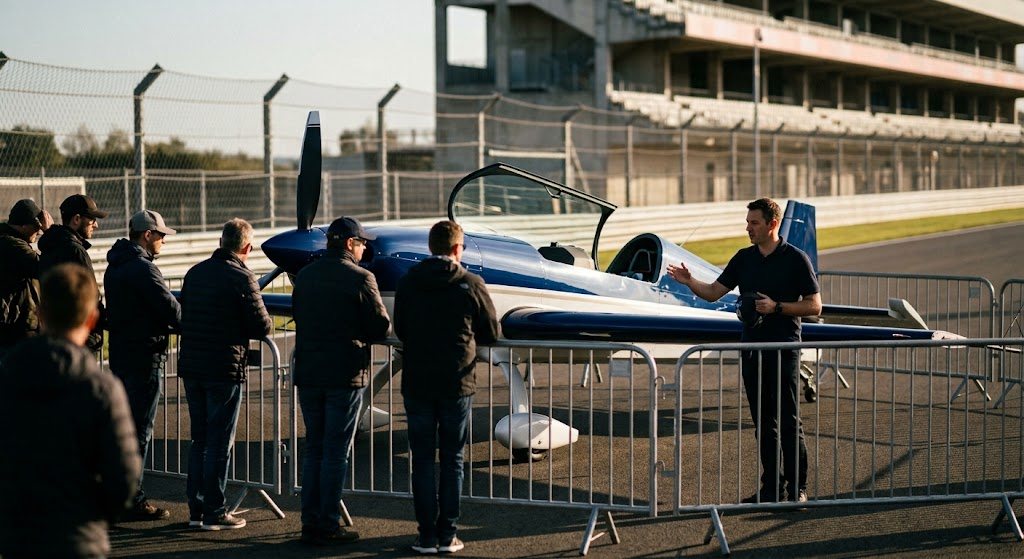
The Sky Village opens free on Thursday and runs all four days. It is the ground-level half of the championship: the aircraft display where you can stand next to the airframes, the sim rigs where you fly the same Combat System the University Series competes on, the meet-the-grid sessions with pilots and gamers, and the Propeller Zone with its fleet walk-round.
It is also where the weekend has its texture — food, live entertainment, the ribbon cutting on Thursday, and the screens that carry every session so you never lose the competition while you are walking around.
See ticket options| Day | In the Village |
|---|---|
| Thursday | Free opening · ribbon cutting · live entertainment |
| Friday | Sim rigs · aircraft display · training blocks overhead |
| Saturday | Meet the grid · Propeller Zone · qualifying overhead |
| Sunday | The Grand Battle · Grand Podium |
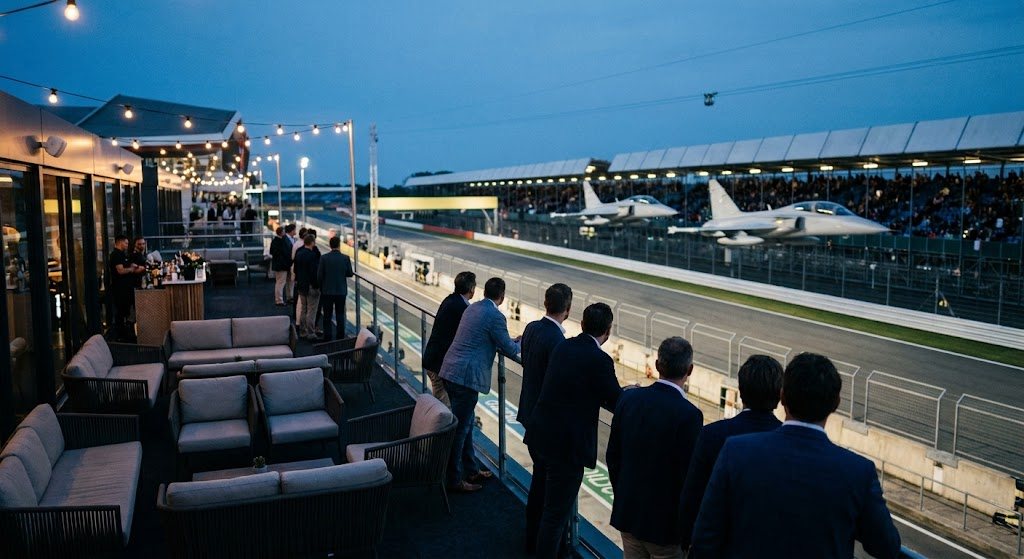
Every vantage point sees the same fight